
Each turn represents a day and is broken up into phases, which are described in more detail below.
Invasion Phase
The game starts with a visual representation of the USMC invasion of the island. This phase only happens on the first turn of the game.
Japanese Invasion Bombardment Phase
The Japanese waited almost an hour after the USMC had landed before they opened fire with everything they had. The USMC was caught by surprise at the ferocity of this attac,k having thought most of the Japanese had been killed in the pre-landing bombardment that had been going on for days prior to the invasion. This phase only happens on the first turn of the game.
Turn Start
The start of each turn represents the beginning of a new day. Several things happen at this point that are important to the player. First, the game determines if there are any reinforcements and/or replacements available during the turn. Reinforcements will be deployed during the following Marine Reinforcement Phase. Replacements will be shown in the bottom menu and will be available for use during the Marine Replacement Phase.
The game also determines the amount of support points available. These are also displayed in the bottom menu.
Finally, the game also determines if units are in command and control for the turn. Each HQ exerts a command and control range of 5 hexes. Units within that range are considered to be in command and control for the entire turn. Units that are beyond that range are considered out of command and control. Units that are out of command and control will be marked with a red symbol at the bottom of the unit counter. These units may move, but may not engage in combat, receive replacements, or recover fatigue.
Marine Reinforcement Phase
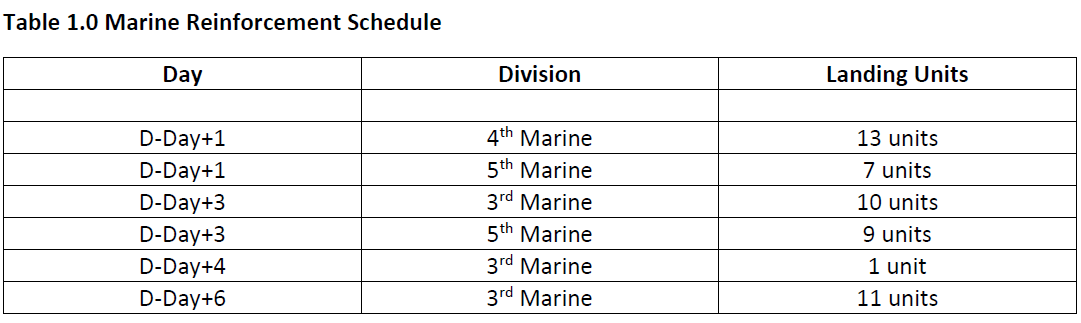
The invasion force comprised almost 70,000 men. The invasion beaches weren’t large enough to handle that large a force, even if the planners had wanted to deliver them all together. Instead, the Marines were delivered over the course of several days.
During the Marine Reinforcement Phase, any scheduled reinforcements will be automatically deployed on the map. These reinforcements will be delivered to the landing beaches designated for their parent division.
Units in this game may not stack. If the invasion is going badly and the beaches are not clear of units, then reinforcements may be postponed. Postponed reinforcements will be delivered on the next turn that has clear beach hexes.
Marine units landing as reinforcements are automatically considered to be in command and control for that turn. They may move and attack normally, receive replacements, and recover fatigue.
Support Phase
The Japanese had turned Iwo Jima into a defensive nightmare, with multiple defensive lines of bunkers and entrenchments supported by a myriad of mutually supporting strongpoints. Attacking enemy positions often required herculean effort.
However, the American forces at this time were perhaps the best equipped, most heavily armed in the world. The attacking Marines were able to call upon a wide range of support options, including artillery, close air support, armor, and heavy weapons.
In the Marine Support Phase, you may assign support to one or more of your units. Support reduces the effectiveness of enemy fire and so may reduce the casualties inflicted on a unit.
Clicking on a unit will apply support to the unit. The unit will be marked with an icon to indicate that it has been granted support. If you change your mind, you may unassign support by using the right mouse
click on a supported unit. The support will be returned to the pool of support points and can be allocated to a different unit.
Once granted, support applies for the entire game turn and is only removed at the end of turn.
The availability and amount of support is not guaranteed, however. The pool of available support is determined at the start of each game turn and will vary from turn to turn. The available support points are displayed in the bottom menu
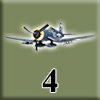
Once all support points are used, you may no longer provide support to other units. Unused support points are not carried over from turn to turn. Unused support points are lost if they are not used.
Marine Movement Phase
You may move any of the units in this turn. Movement range is unlimited, but can be restricted by the following:
- A unit’s movement is interrupted when it receives Japanese opportunity fire attacks. The unit may continue moving after the attack is resolved.
- Unit movement ends when it enters the Zone of Control of an enemy unit
- Units cannot move into fortified hexes in the Zone of Control of an enemy unit
- Units cannot move into a hex occupied by an enemy unit
- Units cannot end their turn in a hex occupied by another friendly unit
- Armor units cannot move onto Mount Suribachi
USMC units that move within a two (2) hex range of any Japanese unit will be subject to opportunity fire. Note that this means if you move within two (2) hexes of one or more Japanese units, each unit may take an opportunity attack against that moving USMC unit. Each Japanese unit will opportunity fire on any Marine unit that moves within this two (2) hex range, this means that the Japanese unit can fire many times in a turn; however, they may only make one opportunity fire on the same unit, no matter how many times it enters within this two (2) hex range in that turn.
Japanese Artillery Phase
The Japanese had over 400 artillery pieces on Iwo Jima. Most were well hidden in fortified emplacements. The Japanese also had excellent visibility from Mount Suribachi in order to direct accurate fire onto Marine positions.
During the Japanese artillery phase, the Japanese will attack multiple Marine units with an artillery strike. The number of strikes depends on several factors. First, the Japanese divided the island into a number of defensive zones, each with artillery assets. The player cannot know exactly where each deployment zone lies, just know that the amount of available artillery varies over the island.
Mount Suribachi also provides a bonus to the Japanese. Taking Mount Suribachi will reduce the number of artillery strikes directed at Marine units, but will not completely neutralize the attacks.
There are a number of modifiers that will impact the effectiveness of artillery strikes during the game. These modifiers increase or decrease the strength of an artillery attack.
- Strikes against units located in airfield hexes receive a +1 modifier.
- Strikes against units located in beach hexes receive a +1 modifier.
- Strikes on D-Day receive a +2 modifier.
- Strikes on D-Day+1 receive a +1 modifier.
- Strikes in open hexes close to the beaches receive a +1 modifier. This modifier applies until D-Day+3. After this turn the modifier is no longer applied.
As you can see, artillery strikes against units in open hexes can be quite effective.
Each artillery strike can inflict up to 2 steps of damage on the receiving unit. Targeted units can be eliminated by artillery fire. When damage is inflicted, victory points are awarded to the Japanese. The Japanese receive 1 victory point for each step of damage inflicted. If the unit is eliminated, the Japanese receive an additional victory point.
Japanese Combat Phase
Japanese units adjacent to a USMC unit will initiate combat against that unit. If next to several US Marine units, it will pick only one to attack.
The Japanese will get combat bonuses for the following:
- Being in higher terrain than the defending unit
- Defending unit is within range of more than one Japanese unit and therefore exposed to multiple angles of fire
- Defending unit is in a Beach hex
- Defending unit is in an airfield hex
- Japanese unit is attacking an armor unit.
Units that are supported that turn will reduce the hidden combat factor of the Japanese unit and thus potentially reduce the number of step losses it may suffer.
If the Japanese attack is successful, the Marine unit will lose one or more steps. For every step lost the Japanese score 1 point. If a unit is destroyed, it receives an additional point.
Regardless of the result of combat, the targeted units will suffer fatigue.
Marine Combat Phase
You may initiate combat against any Japanese unit adjacent to your units. Each marine unit may only attack once and attacks individually. Armor units from the same parent division that are adjacent to the attacking unit will support the attack. Each Armor unit can support an unlimited number of attacks in a turn provided it is adjacent to the attacking units. Armor units may also attack on their own but their combat strength is low and their value is much greater as supporting units.
There is a chance for each marine combat action to trigger a Japanese ambush. If an ambush occurs, then the marine attack is cancelled, and the attacking unit becomes the target of a Japanese attack instead. This attack is resolved in the same way as attacks in the Japanese combat phase.
When initiating a marine attack, the game will display a graphic that shows the various combat factors that will affect the results.

The attacking unit has armor support

The Japanese unit was previously attacked in this turn. Subsequent attacking units get this bonus.

Units with low fatigue levels will lose combat efficiency

Unit is attacking a Japanese unit that is in higher terrain than attacking unit

Bonus awarded on the turn Mount Suribachi is captured

Level 2 fortification

Level 3 fortification
Marine Replacements
If available, you will be assigned replacements that you can use to replace steps lost by units in the game.
The number of replacements available are displayed in the bottom display. They are split between replacements for your marines and armor units.
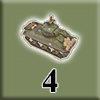
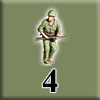
Units eligible for replacements will be highlighted. To assign a replacement to a unit simply click on the highlighted unit. You will see the number of steps it has increased by one.
Night Phase
During the night turn you will face additional Japanese attacks. These may take the form of infiltration attacks or banzai charges.
Infiltration Attacks
Japanese infiltration attacks are far more common than banzai charges. During infiltration attacks, small Japanese units will harass your units. Marine units have no chance to defend themselves. Casualties are unlikely, but these attacks will increase the fatigue of your units.
Banzai Charges
Occasionally, Japanese units will conduct a suicidal “banzai” charge. When these occur, the strongest unit in contact will make the attack. The defending marine unit will be able to defend itself and can inflict casualties on the attacking Japanese unit. Because of the exposed nature of the charge, Japanese units will always take at least 1 step of damage during a banzai charge.
Record Phase/End of Turn
At the end of each day you will see a summary of points the Japanese have scored and your completion of objectives. In addition, disrupted HQ’s will recover and units can recover fatigue if they meet the conditions to do so.
The Japanese score points as follows:
- 1 point for each USMC unit step loss
- 1 point for each USMC unit destroyed
- 3 points for each turn they hold Mount Suribachi
- 2 points for each turn they hold Airfield 1
- 2 points for each turn they hold Airfield 2
- 1 point for each turn they hold Airfield 3
- 2 points for each turn General Kuribayashi remains alive
- 1 point for each turn they hold Tachiiwa Point
- 1 point for each turn they hold the Sea Hex


